
Protect Yourself by Understanding the Stopping Distances for Trucks
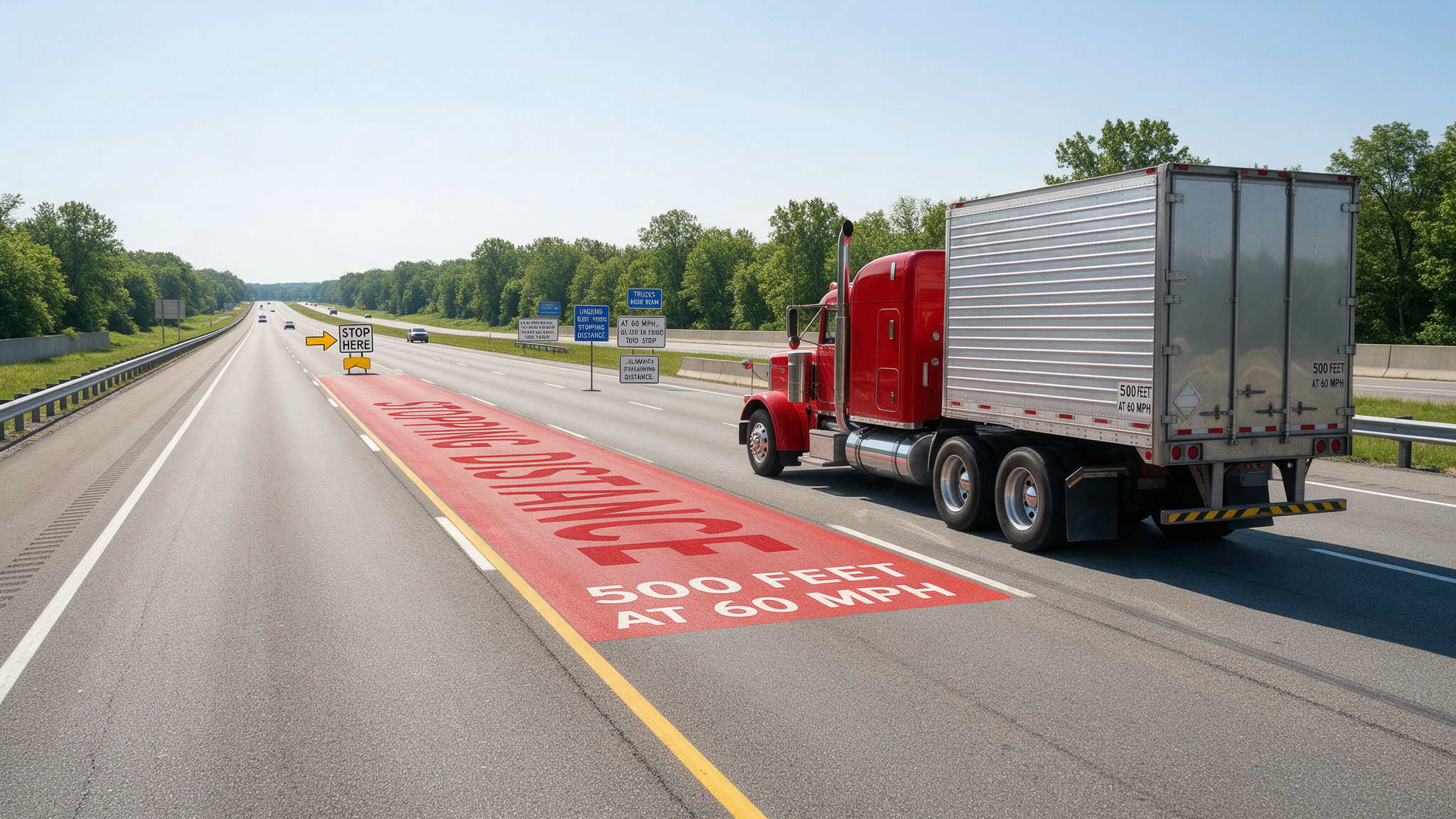
Despite concerns about inflation, consumers in the Atlanta area still buy lots of items, big and small. Whether those items are delivered directly to someone’s home or shipped to a store before purchase, all the goods are delivered by truck. If you feel like there are more trucks on the road, you’re not imagining it.
And because Georgia statutes limit truck traffic within Atlanta, much of it is diverted to areas on the city’s fringes. Trucks then need to travel directly through towns like Decatur to reach their final destination.
The bottom line is that if you drive at all in our area, you will be driving near trucks of all sizes. It is important to understand how their operation differs from cars and passenger vehicles, and the steps you can take to stay safe.
A Truck Accident is Something You Want to Avoid at All Costs
A fully-loaded 18-wheeler in Georgia can weigh up to 80,000 pounds, and the average car in our area weighs only about 4,000 pounds. The truck traveling beside you might be 20 times heavier than your vehicle, so if the two vehicles collide, how do you think you are likely to end up?
Because of the disparities in weight and size, collisions between cars and trucks often result in catastrophic injuries or death. To protect yourself and your loved ones, it makes sense to do what you can to avoid a truck accident or minimize the consequences of a collision.
Trucks Take Much Longer to Stop Than Other Vehicles
For a variety of reasons, trucks cannot come to a stop as quickly as other vehicles when circumstances require a sudden stop. Drivers of passenger vehicles often do not realize this, or keep it in mind when operating in traffic. There are five primary factors that influence a truck’s stopping distance, and these factors vary depending on a truck’s configuration, which affects how long it takes to slow down or come to a full stop. While size and weight are part of the equation, the issue is more complicated than most people expect.
The act of stopping involves four distinct phases. Understanding these phases and the factors that affect stopping speed can help you make smart choices that could have life-saving impacts.
Four Phases of Stopping a Truck
The total time to stop a truck is the time required to complete all four phases of the stopping process. You need to add together:
- Perception time—how long it takes for the driver to recognize the need to stop
- Reaction time—how long it takes for the driver to react to the recognition and apply the brakes
- Brake lag—the time it takes for the brakes to engage in operation after the brake pedal is applied. This may seem immediate in a car, but it can take significantly longer on a truck
- Braking time—the time during which the truck continues to move forward after the brakes start to engage
The four phases of a stop are influenced by several factors. For instance, when a driver is alert and well-trained, perception and reaction time may be optimal. If a truck driver is fatigued, distracted, or impaired by drugs or alcohol, however, the time it takes for the driver to perceive the need to stop and initiate braking action can be dangerously long. Remember that during all four phases, the truck is still traveling forward and can hit other vehicles in its path.
Brake lag can also take longer than necessary and increase the likelihood of a collision if the brakes have not been properly maintained. The final phase, the braking distance, is influenced by how the laws of physics apply to the specifics of the situation. A heavy truck traveling at a high speed on bald tires is going to have a much longer braking distance than a light truck operating at 25 miles per hour with new tires, for instance.
Five Overall Factors That Affect Stopping Distance
From a truck driver’s perspective, trainers commonly point out five overall factors that contribute to the stopping distance of a vehicle regardless of its size or weight. The first factor is traction, or how well the truck’s tires are able to exert force on the surface of the road to control the truck’s direction or speed. When the road surface is slick due to rain, ice, or spilled substances, even the best tires will lose traction and take longer to stop. As a motorist, remain aware of the road conditions and allow extra space around trucks when surfaces are slick.
A second factor is related to traction, and that is curves on the road. When a truck is going around a curve, much of the traction from the tires has already been committed toward turning the heavy vehicle. That leaves less traction force available for stopping, which is a different action. Experienced truckers know to slow down before turns, but those who are inexperienced or in a hurry may not take this precaution. When driving near trucks, be aware that they may slow drastically when going around curves, and watch for the possibility that a lack of traction could cause the truck to come out of the turn early and continue on a forward trajectory.
The third factor is visibility. When drivers cannot see as well, they cannot discern the need to stop quickly. Visibility is reduced not only by the factors that affect all drivers, such as fog, but also by the exceptionally large blind spots of many trucks. If you are within 30 feet behind a truck, 20 feet in front of a truck, or in either lane alongside a truck, you are probably in a blind spot and not visible to the truck driver.
Traffic is the fourth factor. While it is generally safest for all vehicles traveling in the lanes around each other to be going at the same speed, sometimes the speed limits or mechanical conditions of trucks cause them to operate much more slowly. Drivers of other vehicles need to watch for the speed discrepancy and be prepared to react quickly to adjust.
Finally, hills are the fifth general factor that affects stopping distance for a particular truck. When a truck is traveling downhill, the force of gravity can increase the stopping distance tremendously. Allowing additional space around trucks when going downhill can be critical.
Cars vs. Trucks
Every traffic situation is unique. However, to gain a general understanding of the difference in stopping distance between cars and trucks, it is helpful to consider an example. Assuming that the driver of both a car and a truck recognizes the need to stop and react by hitting the brake in the same amount of time, if the vehicles are traveling 55 miles per hour, it will take the truck over 100 feet longer to stop than the car.
When Your Best Efforts to Stay Safe Aren’t Enough, Call on Michael M. Day
Even if you practice every defensive driving technique in the book and maintain constant vigilance, you still cannot control the actions of other drivers, and their negligence can still cause a collision. When that happens, the experienced team at Michael M. Day Law Firm is ready to help you recover the resources you need to move forward after truck accident injuries. For a free, no-obligation consultation to discuss how we could assist with your recovery, call us at 404-480-4284 or contact us online now.