
The Three Phases of Coverage: Who Pays for Your Georgia Uber Accident?
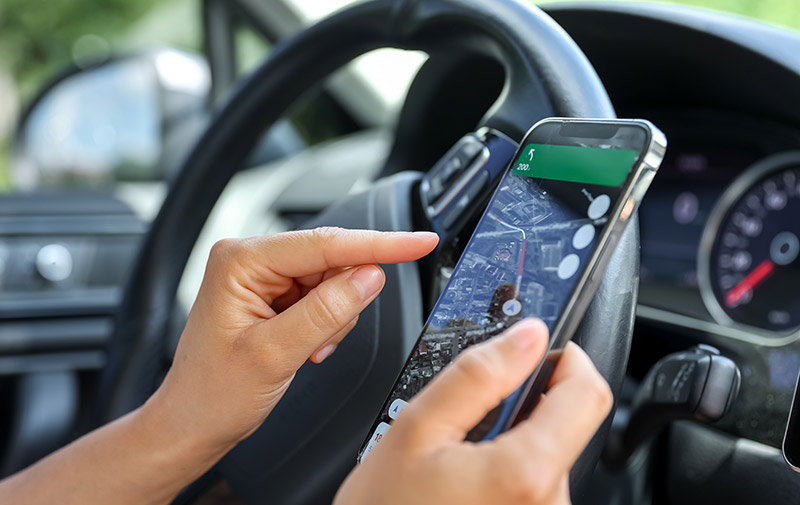
Uber and Lyft have increased transportation options in Decatur and throughout the Atlanta area. But they have also made many car accident cases more complex, particularly from an insurance perspective. In an ordinary car accident, there are usually only two insurance companies involved. But if an Uber or Lyft driver is involved in a car, truck, motorcycle, or pedestrian accident, it can be very difficult to determine which insurance coverage applies.
If you were injured in a collision involving an Uber driver, you can contact an experienced attorney to get a personalized explanation of the insurance coverage that would apply in your specific situation. For general background, here are some guidelines on the three phases of insurance coverage provided by rideshare companies and when they apply.
Liability for Car Accidents in Georgia
To understand why a particular type of insurance would cover a car accident involving an Uber driver, it is helpful to consider Georgia’s basic car accident liability laws. Unlike Florida, our state is an “at-fault” state for auto accidents, so the negligent driver is liable for covering the costs of injuries and damage resulting from an accident. (In a “no-fault state,” by contrast, each person’s own insurance usually pays for the losses regardless of who caused the accident.)
Usually, it is not the at-fault driver who pays the damages, but the at-fault driver’s insurance company. The insurance company will call on its seasoned defense attorneys to argue that its driver was not at fault. In an Uber accident, the rideshare driver is likely to have insurance from two different companies, and that will complicate the case. They will both probably argue that the other company is responsible, or that the victim bringing the legal action is really to blame for causing the accident.
Georgia follows a modified comparative fault rule in accident situations where the person seeking damages may be partially at fault for causing the collision. If the person injured in the accident who filed a claim for damages is less than 50% at fault for causing the crash, they can still recover compensation from the other person who was at fault. However, the share of recovery is reduced by an amount equal to the victim’s share of responsibility for causation.
Insurance Coverage Phases: The Driver’s Electronic Status is the Key
Uber provides liability insurance coverage for its drivers, but that coverage does not apply every time one of its drivers gets into an accident. (You can see the current insurance certificates for Uber on the rideshare company’s website.) The driver’s status in the Uber app determines the type of coverage available and whether any coverage applies. The status can lead to one of three coverage phases.
Phase 1: App Turned On and the Driver is Waiting to Accept a Request
When the driver is logged into the Uber app and has signaled that they are ready to work and accept ride requests, they could be considered partially working for the rideshare company and partially on their own time. They are under no obligation to accept ride requests, after all, and Uber earns nothing from them while they are in this status.
Because the driver’s status is in limbo, the insurance coverage is as well. Uber provides contingent insurance coverage at the minimum level required by law. But their attorneys are likely to argue that it is the driver’s personal insurance that should provide primary coverage. Section 33-1-24 of the Georgia Code specifies that rideshare companies must provide coverage for $50,000 for injuries to an individual in an accident or, if more than one person is injured, $100,000 in total injury coverage. Additionally, the rideshare company must provide $50,000 in coverage for property damage caused by its driver.
Phase 2: The Driver Has Accepted a Ride Request
The second phase is when the most extensive insurance coverage applies. Phase two occurs either when the driver has accepted a ride request through the app and is on the way to pick up the passenger, or after the driver has picked up the passenger and is delivering them to their destination.
In these situations, Georgia law requires Uber to provide $1 million in coverage for injuries and property damage when its driver causes an accident. However, if an Uber passenger is injured and the driver responsible for the collision is uninsured, the coverage may be limited.
Phase 3: The Driver Has Turned Off the App
When a driver has the Uber app turned off, even accidentally, then the rideshare company assumes the driver is operating on their own personal business. If the driver causes an accident while the app is off, the driver’s personal insurance applies.
According to their marketing materials, Uber requires drivers to provide proof of vehicle insurance. If a driver is operating a vehicle owned by Uber or if Uber failed to require the driver to provide proof of insurance, the rideshare company could potentially be liable for an accident in some situations.
Uber’s Insurance Providers Will Not Make it Easy to Recover After an Accident
While it is helpful for accident victims to have insurance resources available to cover the cost of damages after an accident involving Uber drivers, victims need to be aware that recovery will not be easy. With more money at stake, insurance companies are willing to invest more in defense to contest liability. They may try to pressure accident victims to accept a quick settlement that does not provide enough to cover the losses.
It is essential for accident victims to understand their rights after an Uber accident. Once a settlement is accepted, the case is closed and there is no chance to seek additional compensation later even if medical bills continue to pile up. For a free case evaluation or help understanding your options after an Uber accident, contact the team at Michael M. Day Law Firm for a free, no-obligation consultation and case evaluation.