
Your Injuries Must Be Medically Documented if You Want to Recover After a Car Accident
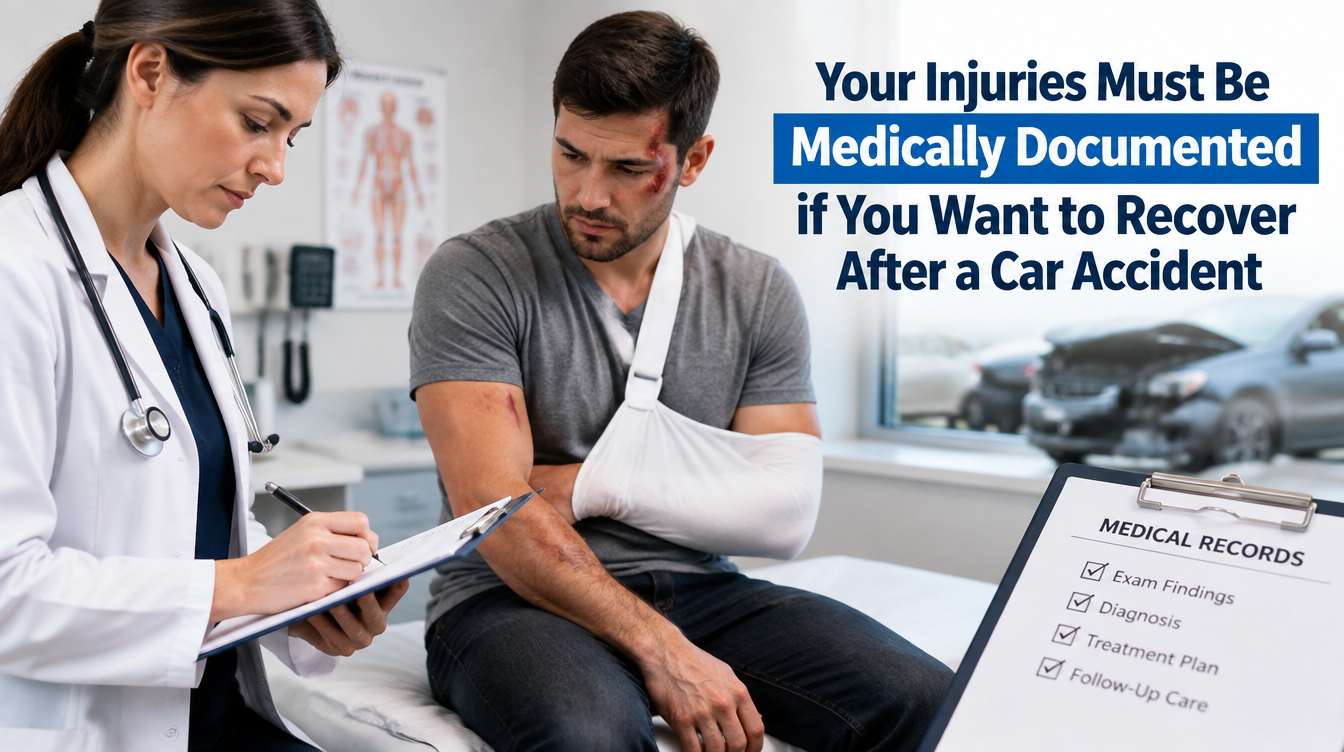
No one knows your body better than you do. You can tell when something isn’t right. And you obviously know when you’re in pain. But in the eyes of the law, it doesn’t matter if you know that you’ve been injured in a car accident. You need proof. Specifically, you need medical documentation.
If you don’t have the right evidence of your injuries, then legally, it is as if they never existed. And that can make it impossible to recover compensation for those injuries.
Every car accident is different, but there are some general patterns and procedures that can help ensure that you have the right medical documentation to support your claim for damages. If you contact us directly for a free consultation, we can explain the actions that would be most beneficial in your specific situation. Here are some general guidelines to consider.
Why Medical Documentation is So Essential to Your Case
There are several reasons why it is so critical to obtain the right medical documentation and present it persuasively. The first reason is that it proves that you actually suffered documentable injuries and are not trying to pull off a scam. When you have evidence that your body endured physical trauma that left broken bones, damaged organs, or the classic symptoms of a traumatic brain injury, it becomes very difficult for the insurance company to deny the existence of your injuries.
But in addition to this, the documents that provide evidence of your injuries can also be used to prove that your injuries came as a result of the car accident. That is vitally important. The insurance company will raise every argument it can think of to avoid paying damages after an accident. They will frequently try to argue that injuries suffered by a car accident victim were really caused by something else. For instance, they might claim that injuries to your back occurred a while ago and that you’re just trying to blame them on the car crash. Or they might claim that you hurt your back playing with your kids after the accident.
A third reason medical documentation is crucial to recovery after a car accident is that these records can be used to help establish the value of your losses and what you should receive as a damage award. Evidence of the amounts you’ve spent on medical care can help you recover damages to cover those costs, as well as amounts for pain and suffering. Damage awards for pain, suffering, and other noneconomic losses need to be tied to evidence of your injuries, and medical documentation plays a key role in this process.
Types of Medical Documentation That Can Support Your Claim
While the medical documentation available will be different in every car accident case, here are some common types of documents that it would be helpful to secure:
- Records of treatment immediately after the collision. To prove that your injuries resulted from the car accident and not another cause, it is essential to have records showing that you went to the doctor as soon as possible after the accident. If you were taken in an ambulance, that’s helpful, but EMTs can miss signs of serious injuries, so it is important to obtain a full medical exam on your own if you are not taken to the hospital directly from the scene of the accident.
- Diagnostic evidence over time. Records such as X-rays, MRIs, CT scans, and other images can depict injuries in ways far more expressive than words. All medical images, test results, and notes from physicians should be saved and included in your medical documentation file.
- Records showing that you received follow-up treatment and that you followed the doctor’s orders. If the doctor said you should return for care in one week and you don’t have evidence that you returned to the doctor, the insurance company will argue that your failure to return is what really made your injuries bad. Or if your doctor says you should avoid putting weight on your leg and you go to work as usual with no modifications, the insurance company will argue that your failure to follow instructions was the real problem.
- Specialist evaluations. If your doctor recommends you see another physician who specializes in treating specific injuries, you should see a specialist and obtain their opinion, diagnosis, and treatment plan in writing.
- Rehabilitation logs. It is helpful to keep a regular log of your progress, including noting the pain and limitations you’re experiencing each day, as well as the steps you are taking to follow the doctor’s orders or rehabilitation instructions.
Documentation does not need to come from an official medical source. If you take photos of your bruises and swelling and make notes about the level of pain you’re enduring, those records can also serve as vital evidence documenting your injuries.
Using Your Medical Evidence to the Greatest Advantage
Insurance companies will often tell accident victims that they do not need an attorney. If you’ve got full documentation of your injuries, you might see why it would make sense to work directly with the insurance company. You present evidence of your medical bills, and they offer you compensation.
However, experienced personal injury attorneys know that accident victims are often legally entitled to receive far more than the insurance company will offer upfront. It requires skillful negotiation grounded in established legal precedent to secure a settlement from an insurance company for the full amount. Essentially, you need to be able to show that you’re prepared to succeed in court, and that is extremely difficult to do without extensive legal experience. A skilled accident attorney will know how to use your medical documentation to secure maximum compensation for intangible effects of your injuries, as well as compensation for your tangible losses, such as medical needs.
Get a Free Case Evaluation and Find Out What We May Be Able to Recover on Your Behalf
To recover maximum compensation after a car accident, you need two things: the right evidence and the knowledge of how to use that evidence. A dedicated personal injury lawyer can help with both. If you or a loved one suffered injuries in a car accident, we invite you to schedule a free case evaluation to learn more about the ways we can help recover the evidence and build the strongest possible case for recovery. To get started, just call us at 404-480-4284 or contact us online now.